Пони тейл лифтинг

Ponytail Facelift

  • Promotion
  • Promotion
  • Promotion

Types of surgery

Lower eyelid surgery

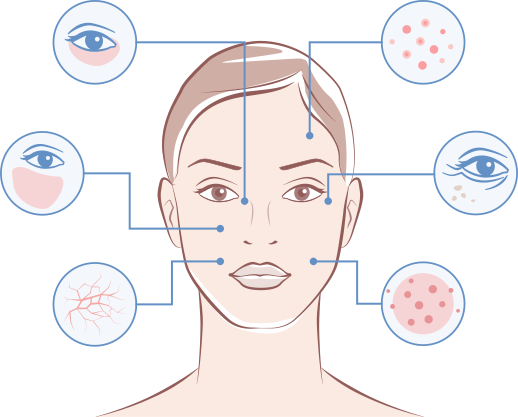
With the help of this operation, bags under the eyes are eliminated, deep nasolacrimal grooves are corrected, and the contouring of the edge of the orbit, which creates the effect of sunken eyes, is corrected.

Lower eyelid surgery

Upper blepharoplasty

With the help of this operation, the drooping upper eyelid and hernias of the inner corners of the eyes are eliminated.

Upper blepharoplasty

Circular eye surgery

During such an operation, the doctor performs a comprehensive correction of the upper and lower eyelids, while maximizing the rejuvenation effect by eliminating all of the above problems at once.

Circular eye surgery

Canthoplasty

A change in the shape or angle of the eyes, usually the outer one. But there is also internal canthoplasty, which is most often performed to correct scar deformities or eliminate pathological folds.

Canthoplasty

Asian eye surgery

During this operation, the doctor creates a fold of the upper eyelid and removes the epicanthus - an overhanging fold of skin located on the inner corner of the eye.

Asian eye surgery
Depending on the technique of the operation, the following techniques can be distinguished:
  • Transconjunctival blepharoplasty
    Transconjunctival

    In this case, the doctor performs all manipulations through small, invisible incisions in the conjunctival area. This technique involves removing excess fat tissue or redistributing its volume to eliminate bags under the eyes or disguise contouring of the eye socket. Excess skin is not removed, so this operation is performed only if the skin turgor is satisfactory. The advantages of this technique are the absence of visible scars on the eyes and the possibility of eversion of the eyelids. On the other hand, the transconjunctival method cannot eliminate pronounced age-related changes.

  • Percutaneous blepharoplasty
    Percutaneous blepharoplasty

    This involves making an incision in the skin of the eyelids, making it possible to remove excess skin. The disadvantage of this technique is the presence of external scars, which are located just below the ciliary edge on the lower eyelid and in the crease area of ​​the upper eyelid. Among the advantages of the technology is the ability to correct age-related changes in the skin in the eye area and a rejuvenating effect.

Thus, different blepharoplasty techniques have their own indications.
But there are general contraindications to surgery. This includes the following conditions:
  • The presence of acute or decompensated ophthalmological diseases, for example, glaucoma, conjunctivitis, dry eye syndrome, keratitis, etc.

  • Chronic diseases during the period of decompensation.

  • Violation of hemostasis - the blood clotting system.

Pros and cons of the operation

With the help of blepharoplasty, aesthetic problems of the skin of the periorbital area can be radically eliminated. None of the most modern and effective cosmetology technologies have such an effect. In addition, it lasts for years and even decades.

At the same time, surgery is always an invasive intervention that requires a recovery period and can lead to undesirable consequences.

Recovery after abdominoplasty

How is recovery going?

Blepharoplasty does not require hospitalization of the patient and does not lead to long-term disability. The ability to work is determined by the state of appearance. In the first days after surgery, swelling of the tissues of the periorbital area and the formation of hematomas will increase. On average, these phenomena disappear within 10-14 days of rehabilitation. Stitches, if any, are removed within 3-5 days. To speed up the healing and disappearance of swelling and bruising around the eyes, you must adhere to the following recommendations:

  • Sleep with your head elevated, for example, on high pillows.

  • In the first days, you can apply cold to your eyes, for example, ice cubes wrapped in a clean towel. They are used every 2 hours for 20 minutes.

  • If the eyelids do not close due to swelling, then it is necessary to regularly moisturize the sclera. For this purpose, special drops are used, which can be purchased at the pharmacy.

  • You should not use contact lenses or decorative cosmetics for a month.

  • It is also recommended to refrain from physical activity, heavy lifting, excessive forward bending of the body and thermal procedures.

Works of doctors

View other works

View other works


Experienced doctors

All doctors

Prices for blepharoplasty

<>

Other services

  • More details

    More details

    Such people look tired and older than their age, and complain of a feeling of obstruction when looking down. Lower blepharoplasty can solve these problems.
  • More details

    More details

    Upper eye blepharoplasty makes it possible to restore youth and self-confidence. This fairly simple operation can radically improve the aesthetic characteristics of the face.
  • More details

    More details

    For complaints about age-related changes in the eyelids, the technique of circular blepharoplasty is effective - a low-traumatic operation that is performed in our clinic in St. Petersburg.

Deep Plane Facelift

  • Вступление: Deep Plane Facelift
  • Подстрочник: As we age, the tissues in the middle and lower thirds lose support. Contours become blurred, wrinkles appear on the face.
    Today, Deep Plane Facelift is considered one of the effective solutions to the problem. This is a deep lift that allows you to avoid damaging the upper layers of the skin.
  • Promotion
  • Promotion
  • Promotion
Deep Plane Facelift
With age tissues in the middle and lower thirds lose support. Contours become blurred, wrinkles appear on the face.

Today, Deep Plane Facelift is considered one of the effective solutions to the problem. This is a deep lift that allows you to avoid damaging the upper layers of the skin.

Content

An innovative method of facelift was developed by American plastic surgeon Andrew Jacono. Now you can sign up for an operation using his method at the ForMe clinic in St. Petersburg.

What is the difference between Deep Plane Facelift and other types of facelift

  • Works with deep layers.

    Unlike other types of lifting, Deep Plane Facelift allows you to tighten the skin, muscles, and fat packets. Thanks to an integrated approach, the result is natural.

  • There is no “doll face” effect.

    The features remain expressive, without artificial facial expressions.

  • Fast recovery.

    Swelling and bruising go away faster than with a circular lift. This takes about two weeks, not a month.

  • Less pain and discomfort.

    The technique practically does not disturb the skin, so healing is easier.

  • Invisible scars.

    The incisions heal almost without leaving marks. There are minimal changes in the area of ​​the lobes, ears, and shells.

  • The effect lasts for more than 10 years.

    The result lasts longer than after SMAS lifting, because the fixation occurs on deeper layers.

  • Often performed in combination with Deep Necklift

    — deep plastic surgery of the neck — or endoscopic lifting of the forehead area.

Indications

  • jowl formation;
  • sagging in the neck area;
  • deformation of the oval of the face;
  • sagging corners of the mouth;
  • prolapse of the zygomatic area.

Contraindications

  • chronic diseases in the acute stage;
  • liver failure;
  • renal failure;
  • malignant formations;
  • difficulties with blood clotting;
  • infectious diseases;
  • pregnancy;
  • breast-feeding;
  • diabetes mellitus

How is a deep facelift performed?

  • The patient makes an appointment with a plastic surgeon. At this stage, the desired effect is discussed and the rejuvenation method is chosen.
  • The patient undergoes tests and examinations to ensure there are no contraindications.
  • On the day of the procedure, the patient comes to the clinic and registers. The anesthesiologist and surgeon check his condition and answer questions. Then doctors mark and induce anesthesia.
  • The surgeon makes incisions in the ear area and along the scalp to hide the scars. If neck plastic surgery is performed, access under the chin is added.
  • Minimal separation of the skin is performed, after which the doctor moves on to the deeper structures.
  • The smas layer is fixed in the new position.
  • Excess tissue is removed or redistributed.
  • Excess skin is excised without tension to avoid rough scars.
  • Neat stitches and a bandage are applied.
  • The patient is transferred to a comfortable room for observation.

Rehabilitation after The Deep Plane Facelift surgical procedure takes approximately two weeks to complete. The stitches are removed after 7–10 days. During the first month, it is important to treat the area of ​​correction with care: avoid sudden movements and sleep on an elevated headboard.

Why you should contact the ForMe clinic for the Deep Plane Facelift service

ForMe Clinic is one of the few in St. Petersburg that performs lower third lifting using the original Deep Plane Facelift technique. We adhere to a precise protocol, where each stage is aimed at maximum results. You can find out prices and schedule a consultation through our website or by phone. The clinic was opened in the center of St. Petersburg on Vasilyevsky Island.

Works of doctors

View other works

View other works


Experienced doctors

All doctors

Deep Plane Facelift Prices

<>

Rhinoplasty

  • Вступление: Rhinoplasty
  • Подстрочник: The key to harmony and symmetry of appearance
    Rhinoplasty is an operation to correct the size and shape of the nose, its individual parts, as well as congenital and acquired deformities. This plastic surgery changes the appearance of the face, harmonizing its features, and in some cases even allows solving health issues.
  • Promotion
  • Promotion
  • Promotion

Types of rhinoplasty

Depending on the purpose of the plastic surgery, the surgeon can work with different parts of the nose and its structures:
  • Hump ​​rhinoplasty

    Hump ​​rhinoplasty

    Usually a congenital hump is combined with a high and narrow nose. When performing plastic surgery, it is necessary to take this feature into account and compensate for the narrowness of the nasal passages so that breathing problems do not arise. During plastic surgery, work is done on the bone and cartilaginous base of the nose, and it may even be necessary to move its side walls. In order for facial features to be harmonious, it may be necessary to correct the tip of the nose so that it does not look too long.
  • Septoplasty

    Septoplasty - changes in the nasal septum

    In its isolated version, it does not change the shape of the nose and is performed in case of traumatic displacement or breathing problems. However, it can also be used in combination with other types of rhinoplasty.
  • Plastic surgery of the tip of the nose

    Plastic surgery of the tip of the nose

    During this operation, work is carried out only on the tip; the osteochondral skeleton is not affected. The intervention technique depends on what specific problem needs to be corrected. For example, when reducing the wings, the wing cartilages and/or adipose tissue located between them are resected
  • Reconstructive rhinoplasty

    Reconstructive rhinoplasty

    It is performed on patients with severe nasal deformities, which can be either congenital or acquired. In any case, this is a complex operation that requires the movement of osteochondral structures and even the use of various implants (both artificial materials and natural ones).
  • Revision rhinoplasty

    Revision rhinoplasty

    Patients who are dissatisfied with the aesthetic parameters or functional features of the first plastic surgery resort to it. Repeated intervention requires special qualifications of the surgeon, since the patient already has anatomical changes. Some patients may need bone or cartilage grafts.
  • Non-surgical rhinoplasty

    This technology is gaining increasing popularity. Long-acting fillers are used here; with their help, you can correct the missing volume, eliminate asymmetry, a forked tip, etc. The procedure has maximum safety, is absolutely non-traumatic, and does not require a recovery period. Disadvantages include a small range of problems that can be solved and the reversibility of the result (on average, it lasts for 6-8 months).

How is rhinoplasty performed?

The technical nuances of the operation will depend on the type of intervention. It can be performed from two accesses - open and closed.
  • When access is closed

    The incision is made on the inner surface of the nostrils, and the stitches will be completely invisible to strangers. Further tactics will be determined by the qualifications of the surgeon and the planned work. For example, endoscopy can be used, which allows visualization of internal structures using a miniature video camera.
  • When open access

    Incisions are made in the columella, the skin barrier between the nostrils where it connects to the upper lip. Then the skin and soft tissues are peeled off and the osteochondral base of the nasal skeleton is exposed. This technique is used in reconstructive or repeat operations when there is a change in the anatomy of an organ, and the doctor needs to clearly understand the relationship of the tissues.

Recovery after surgery

Even in the operating room, the patient's nostrils are tamponed with turundas or splits. A plaster cast is applied to the back (if it has been corrected). The turundas are left in place for several days and the cast is removed after a few weeks. But even after this, it is necessary to protect the face from accidental deformations. The patient is asked to refrain from wearing glasses, limit sports activities, and sleep exclusively on his back.

The first results are assessed after a month, when pronounced swelling subsides and bruises disappear. But the final result will be visible a year after the operation, when the tissues fall into place and post-traumatic swelling finally subsides.

Works of doctors

View other works

View other works


Experienced doctors

All doctors

Cost of services

<>

Endoscopic Brow Lift

  • Вступление: Endoscopic forehead lift
  • Подстрочник: Endoscopic forehead lift is one of the most progressive methods of plastic surgery of the upper third of the face. It allows for effective rejuvenation of this area with minimal tissue trauma and a short recovery period.
    In terms of technical equipment of the operating unit, the clinic meets the highest international standards and is not inferior to the world's leading plastic surgery centers.
  • Promotion
  • Promotion
  • Promotion

Indications for endoscopic forehead lift

  • Age-related ptosis of the eyebrows, which is characterized by drooping of the outer edge of the eyebrow.
  • Bilateral or unilateral eyebrow ptosis that develops as a result of damage to the facial nerve.
  • Wrinkles in the forehead area. The operation effectively eliminates both horizontal and vertical wrinkles, as well as wrinkles between the eyebrows in the bridge of the nose.
  • Drooping of the upper eyelids. Intuitively, it seems that blepharoplasty should solve this problem, but in some cases a forehead and eyebrow lift is also indicated.
Endoscopic surgery is the optimal solution for patients with a low, flat forehead, a clear hairline and satisfactory skin turgor, without significant excess skin. This skull shape is optimal for closed endoscopic procedures.
At the same time, a high and convex forehead can present a number of technical difficulties.

Benefits of the operation

  • All endoscopic procedures are performed through several incisions in the hair growth area. Subsequently, they are hidden from prying eyes and after healing do not leave visible marks.

  • Small incisions do not lead to disruption of blood and lymph circulation, so swelling here is less pronounced than during open surgery. It also prevents hair loss in the scar area.

  • Endoscopic equipment is equipped with a miniature video camera that transmits a high-quality enlarged image to the monitor. This helps to work more accurately and accurately with delicate structures, for example, with nerve trunks, preventing their damage and the development of a number of complications.

  • Faster recovery compared to open repair.

Technique for endoscopic forehead lift

The operation is performed under general anesthesia. Several small incisions are made in the scalp area, 1-2 cm above the hairline. Their number depends on the type of endoscopic equipment and the individual characteristics of the patient. Most often, two vertical incisions are made in the forehead area. Next, instruments are inserted into these incisions and the subperiosteal musculocutaneous flap is peeled off to the upper edge of the orbits. Next, the tissues are shifted posteriorly, redistributed as needed and fixed to the bone. The skin is not removed.

Endoscopic forehead lift
The choice of one or another surgical technique will depend on the characteristics of the individual patient.

Recovery

At the end of the endoscopic operation, the incisions are closed with sutures. Sutures and fixators are removed after 10-14 days. In the first days after plastic surgery, bruising, swelling, numbness of the skin, and slight asymmetry are possible. Gradually these phenomena pass. 5 days after the operation, you can wash your hair and continue walking without a bandage.

Works of doctors

View other works

View other works


Experienced doctors

All doctors

Cost of services

<>

Other services

  • More details

    More details

  • More details

    More details

  • More details

    More details

Otoplasty

  • Вступление: Otoplasty
  • Подстрочник: Otoplasty is an aesthetic and reconstructive plastic surgery that allows you to change the shape, size or position of the ears in order to achieve harmonious proportions. Ear correction may be necessary if the patient is bothered by protruding ears, unusually large ears, severe asymmetry, changes in shape after injury, or congenital anomalies: for example, complete or partial absence of the auricle.
  • Promotion
  • Promotion
  • Promotion

Methods and types of otoplasty

Elimination of protruding ears and correction of other defects is performed using basic plastic surgery techniques:

  • Mustard method
    During the operation, the doctor forms an antihelix, which is absent in the patient with protruding ears. The surgeon makes an incision in the area behind the ear cartilage and thins it. Then the antihelix itself is formed and secured with sutures.
  • Etenstorm method
    This type of otoplasty is used to reduce the size of the ears. The surgeon cuts down to about one centimeter in the area of ​​the behind-the-ear fold, thins the cartilage tissue, models it and connects the skin with sutures to fix the position.
  • Furnas method
    This otoplasty method removes the tissue between the external ear canal and the head, then tightens the ear cartilage, which is attached to the bone. Doctors use this technique to eliminate protruding ears.

Who is prescribed otoplasty?

Many patients from different cities and even countries who have the following indications come to our clinic for ear plastic surgery:
  • protruding ears or other deformities;
  • excessive depth of the auricle;
  • uneven ear development;
  • ear damage due to injury or illness;
  • congenital anomalies.
Contraindications to otoplasty:
  • ARVI, acute respiratory infections;
  • exacerbation of chronic diseases;
  • problems with blood circulation;
  • deficiency of blood supply to the auricle;
  • bleeding disorders;
  • mental disorders;
  • poor wound healing or skin scarring.
Ear surgery is performed on adults over 18 years of age. Before otoplasty, it is necessary to undergo a specialist consultation and examination to determine the indications for the operation, as well as to identify possible contraindications. Registration is carried out by phone and on the ForMe website.

Preparation for otoplasty

During a personal meeting, the doctor will listen to your wishes and tell you in detail about ear correction methods, possible risks and results. No later than two weeks before the operation, you will need to undergo laboratory and instrumental tests: take blood and urine tests, sign up for an ECG, and consult with a general practitioner. Also, in a couple of weeks you should stop smoking and drinking alcohol, and stop taking medications that reduce blood clotting. For example, those that contain acetylsalicylic acid.

On the eve of otoplasty, you should wash your hair with shampoo and not eat or drink for six hours before surgery. Immediately before ear correction, our doctor will take a photograph of you to evaluate the result, and, if necessary, make a special surgical hairstyle so that your hair does not block access to your ears.

Stages of otoplasty

Ear plastic surgery in our clinic in St. Petersburg consists of several stages:

  • Before otoplasty, the patient is put into medicated sleep, or an anesthetic is administered to reduce discomfort and eliminate pain during the operation.
  • The plastic surgeon makes an incision in the back of the ear and reshapes the cartilage to correct its shape. It is important that the ear fits closer to the head. If necessary, the doctor sutures the earlobes and removes excess skin.
  • To fix the new position of the cartilage, the doctor places rollers on the ears, on top of which he places a bandage or bandage. The rollers should be used for another month after correction. The operation takes approximately 1–2 hours.

The final result of the operation is not immediately visible, as it takes time to heal and fix the new shape of the ears.

Rehabilitation period

  • Immediately after surgery.
    If there was general anesthesia, the patient remains in the hospital for observation for 1–2 days. During this period, slight discomfort, pain and swelling may be felt.
  • First days.
    You should take prescribed medications, maintain hygiene, and not exert yourself physically. It is also recommended to wear a headband to maintain the shape of the ears.
  • Healing period.
    In the following weeks, tissue swelling and hematomas may persist. It is important to care for the wound, consider restrictions on physical activity, follow recommendations, and attend checkups to monitor healing.
  • Final restoration.
    Full recovery usually takes from several weeks to several months. During this period, a change in skin sensitivity may be observed.

To make scars even more invisible, the surgeon can prescribe procedures from a cosmetologist. For example, an effective technique is laser therapy aimed at smoothing the relief of seams. It can be done at our medical center. In addition, we have developed the best rehabilitation programs.

Ear surgery before and after

View other works

View other works

Why you should contact the ForMe clinic

At the ForMe clinic, experienced doctors in St. Petersburg provide consultations and perform otoplasty, who know all the modern techniques in the field of ear correction and use the most modern equipment. We have a medical license and all the necessary certificates confirming the experience and qualifications of doctors.

You can find out the exact prices for services, ask questions, and also sign up for a consultation by phone, online on the website or during a personal visit. The cost of the operation depends on the type of technique chosen, the initial problem and the scope of the intervention. As for the address: we are located in the Vasileostrovsky district - on Sredny Avenue of Vasilyevsky Island, 2B.


Experienced doctors

All doctors

Prices for otoplasty

<>

Other services

  • More details

    More details

    Using modern available techniques, surgeons correct the size and improve the features of the face and neck. The oval takes on harmonious shapes without a double chin or other flaws in profile and front.
  • More details

    More details

    Age-related changes primarily appear on the face and neck. And if the contour “floats”, the skin has lost its elasticity, a double chin has formed, platysmoplasty will help remove all this. In one procedure, you can tighten the skin on your neck and make the oval clear.
  • More details

    More details

    Facelift or circular lift is a full-fledged surgical operation, which eliminates all types of age-related changes. For example, sagging integument.

Face & Neck Lift

  • Подстрочник: The neck area is considered one of the indicators of aging. It is by the skin of this area that one can determine a person’s age. At the same time, many women try to carefully care for their face, forgetting about their neck.
    The situation is aggravated by the fact that the skin in this area is thin and less elastic, so wrinkles quickly appear on it, which are difficult to get rid of with the help of cosmetic products. An effective way to rejuvenate, even in the presence of pronounced age-related problems, is neck lift surgery.
  • Promotion
  • Promotion
  • Promotion

Types of surgery

Lower eyelid surgery

With the help of this operation, bags under the eyes are eliminated, deep nasolacrimal grooves are corrected, and the contouring of the edge of the orbit, which creates the effect of sunken eyes, is corrected.

Lower eyelid surgery

Upper blepharoplasty

With the help of this operation, the drooping upper eyelid and hernias of the inner corners of the eyes are eliminated.

Upper blepharoplasty

Circular eye surgery

During such an operation, the doctor performs a comprehensive correction of the upper and lower eyelids, while maximizing the rejuvenation effect by eliminating all of the above problems at once.

Circular eye surgery

Canthoplasty

A change in the shape or angle of the eyes, usually the outer one. But there is also internal canthoplasty, which is most often performed to correct scar deformities or eliminate pathological folds.

Canthoplasty

Asian eye surgery

During this operation, the doctor creates a fold of the upper eyelid and removes the epicanthus - an overhanging fold of skin located on the inner corner of the eye.

Asian eye surgery
Depending on the technique of the operation, the following techniques can be distinguished:
  • Transconjunctival blepharoplasty
    Transconjunctival

    In this case, the doctor performs all manipulations through small, invisible incisions in the conjunctival area. This technique involves removing excess fat tissue or redistributing its volume to eliminate bags under the eyes or disguise contouring of the eye socket. Excess skin is not removed, so this operation is performed only if the skin turgor is satisfactory. The advantages of this technique are the absence of visible scars on the eyes and the possibility of eversion of the eyelids. On the other hand, the transconjunctival method cannot eliminate pronounced age-related changes.

  • Percutaneous blepharoplasty
    Percutaneous blepharoplasty

    This involves making an incision in the skin of the eyelids, making it possible to remove excess skin. The disadvantage of this technique is the presence of external scars, which are located just below the ciliary edge on the lower eyelid and in the crease area of ​​the upper eyelid. Among the advantages of the technology is the ability to correct age-related changes in the skin in the eye area and a rejuvenating effect.

Thus, different blepharoplasty techniques have their own indications.
But there are general contraindications to surgery. This includes the following conditions:
  • The presence of acute or decompensated ophthalmological diseases, for example, glaucoma, conjunctivitis, dry eye syndrome, keratitis, etc.

  • Chronic diseases during the period of decompensation.

  • Violation of hemostasis - the blood clotting system.

Pros and cons of the operation

With the help of blepharoplasty, aesthetic problems of the skin of the periorbital area can be radically eliminated. None of the most modern and effective cosmetology technologies have such an effect. In addition, it lasts for years and even decades.

At the same time, surgery is always an invasive intervention that requires a recovery period and can lead to undesirable consequences.

Recovery after abdominoplasty

How is recovery going?

Blepharoplasty does not require hospitalization of the patient and does not lead to long-term disability. The ability to work is determined by the state of appearance. In the first days after surgery, swelling of the tissues of the periorbital area and the formation of hematomas will increase. On average, these phenomena disappear within 10-14 days of rehabilitation. Stitches, if any, are removed within 3-5 days. To speed up the healing and disappearance of swelling and bruising around the eyes, you must adhere to the following recommendations:

  • Sleep with your head elevated, for example, on high pillows.

  • In the first days, you can apply cold to your eyes, for example, ice cubes wrapped in a clean towel. They are used every 2 hours for 20 minutes.

  • If the eyelids do not close due to swelling, then it is necessary to regularly moisturize the sclera. For this purpose, special drops are used, which can be purchased at the pharmacy.

  • You should not use contact lenses or decorative cosmetics for a month.

  • It is also recommended to refrain from physical activity, heavy lifting, excessive forward bending of the body and thermal procedures.

Works of doctors

View other works

View other works


Experienced doctors

All doctors

Prices for blepharoplasty

<>

Other services

  • More details

    More details

    Such people look tired and older than their age, and complain of a feeling of obstruction when looking down. Lower blepharoplasty can solve these problems.
  • More details

    More details

    Upper eye blepharoplasty makes it possible to restore youth and self-confidence. This fairly simple operation can radically improve the aesthetic characteristics of the face.
  • More details

    More details

    For complaints about age-related changes in the eyelids, the technique of circular blepharoplasty is effective - a low-traumatic operation that is performed in our clinic in St. Petersburg.

Mendelsohn Lift

  • Вступление: Mendelssohn lift
  • Подстрочник: Mendelssohn lift: a unique alternative to the classic SMAS lift.
    Only a few surgeries in Russia are proficient in the technique.
    Mendelssohn lifting, or spacelifting, is a modern and effective method of rejuvenation, which serves as an alternative to the classic circular facelift. The author of the technique, an outstanding plastic surgeon from Australia, Brian Mendelson, introduced the concept of “space”, which gave the name to the operation.
  • Promotion
  • Promotion
  • Promotion
Mendelssohn lift: a unique alternative to the classic SMAS lift
Only a few Russian surgeries are proficient in the technique.
The cost of the operation is 420,000 rubles.
The ForMe clinic has one of the largest aesthetic surgery departments in St. Petersburg. Our center employs international class doctors. All procedures are performed using the latest generation equipment.
Content

Spaces

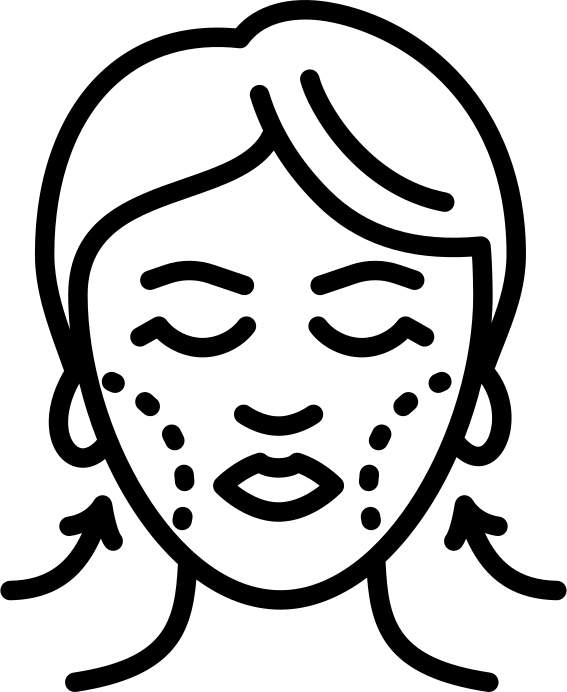
Spaces are free spaces that separate the chewing muscles from a single upper layer, which includes facial muscles, subcutaneous fat and skin. Plastic surgery performed with access to these areas allows you to achieve a clear facial contour without serious injury and the need for long rehabilitation.

Indications and contraindications

Mendelssohn lifting can help women and men who are faced with the following problems:
  • Loss of a clear oval face, tissue ptosis
    Loss of a clear oval face, tissue ptosis.
  • The appearance of jowls
    The appearance of jowls (drooping cheeks).
  • Expressiveness of nasolabial folds
    Expressiveness of nasolabial folds.
  • Excess fat deposits and skin under the chin
    Excess fat deposits and skin under the chin.
correction of age-related changes
The procedure allows you to correct age-related changes in the middle and lower third of the face. The Mendelssohn lift can be performed for both minimal and severe signs of aging.
Contraindications to surgery are standard. Like any other surgical intervention, Mendelssohn lifting cannot be performed if the patient has severe cardiovascular pathologies, blood clotting disorders, or a malignant tumor. The procedure is also not performed during periods of exacerbation of any chronic diseases or during acute infectious diseases.

Preparation for the procedure: tests, examinations

  • Spacelifting
    Spacelifting is a rather complex and lengthy operation that is performed under general anesthesia. Therefore, before the procedure, the patient must undergo a complete examination.
  • research
    It includes a number of laboratory (general blood and urine tests, biochemistry, coagulogram) and instrumental studies (ECG, fluorography).
  • doctor therapist
    A general practitioner assesses the health status and issues permission for surgery. Also, during preparation for the procedure, the anesthesiologist talks with the patient.
  • operation
    The operation is performed in the morning. 8 hours before it starts, you must completely stop eating and drinking anything.

How does the procedure work?

  • arrival at the clinic
    Upon arrival at the clinic, the patient is given the necessary documents, after which he leaves his things in the ward, changes clothes and goes to the operating room.

  • marking
    The plastic surgeon applies preliminary markings to the intervention areas.

    The anesthesiologist then puts the patient under anesthesia.
  • microsurgical equipment
    The Mendelssohn lift is performed endoscopically using microsurgical equipment.

    Small incisions no longer than 1-3 cm are made in the pre-auricular area (closer to the temple) or behind the ear.
  • obtaining adipose tissue
    Under the control of an endoscope, the surgeon carefully tightens and fixes the facial muscles without touching large vessels and nerves.

    The extent of the operation depends on the severity of age-related changes and the individual characteristics of the patient. For example, in some cases only the chin area may be corrected, while in others the entire middle and lower thirds of the face can be corrected. In addition, Mendelssohn lifting can be combined with other plastic surgeries: blepharoplasty, forehead lift, etc.
The duration of the operation is on average 2-3 hours. The surgeon needs even more time when performing additional interventions.

Results of the procedure

During the Mendelssohn lift, the muscles and the subcutaneous fat and skin located above them are repositioned. This entire complex of tissues returns to its original position. The result is maximum naturalness. The face looks younger, ptosis is eliminated. The skin becomes smoother, but without the “tight” effect that can be observed after a classic circular lift.

The operation provides a long-term effect. Of course, the face will undergo aging processes, but repeated tissue ptosis never reaches the scale that it could have without lifting. Therefore, people who have undergone this procedure, even 10-15 years old, look younger than their peers.
Results of the Mendelssohn lifting procedure

Possible complications

When performed correctly, the Mendelssohn lift is one of the least traumatic operations.

However, like any other surgical intervention, the procedure can lead to adverse consequences:

  • Development of bleeding
  • Sensory impairment
  • Inflammatory processes in the soft tissues of the face

The risk of complications when performing surgery in our clinic is minimized due to the qualifications of doctors and the use of modern high-tech medical equipment. After the procedure, the patient is under the supervision of center staff for at least 24 hours.

Postoperative period and rehabilitation

Postoperative swelling and hematomas usually disappear within 1-1.5 weeks. But internal recovery processes take a whole year. Therefore, the patient will need to see their plastic surgeon for checkups at 1, 3, 6, and 12 months after the procedure.

After the operation, the following rules must be observed:

  • Limit active facial expressions and intensive chewing for a week.

  • For the first 7-10 days, sleep exclusively on your back.

  • For a month, avoid mechanical and thermal effects on the face: massage and peeling, visiting baths and saunas.

Frequently Asked Questions

  • Will scars be noticeable after a Mendelssohn lift?

    Due to the fact that the sizes are minimal and conveniently located, postoperative scars will not be visible. The patient can wear a short haircut and comb his hair back - others will not notice the scars hidden behind the ear or in the temporal region.

  • How long after the operation will it be possible to return to my normal lifestyle and go to work?

    The recovery process may take different times for each patient. On average, you can return to work within a couple of weeks. It is possible to completely abandon the restrictions associated with the operation only after consulting a plastic surgeon no earlier than a month after the lifting.

  • How to maintain the effect achieved as a result of the operation?

    The Mendelssohn lift does not involve repeated or corrective interventions. You can maintain the effect with the help of professional cosmetic procedures.

Works of doctors

View other works

View other works


Experienced doctors

All doctors

Price for Mendelssohn lifting in St. Petersburg

<>

Buccal Fat Removal

  • Вступление: Removing Bisha's lumps
  • Подстрочник: Grace and sophistication of the lower third of the face, natural shadow under a pointed cheekbone, sunken cheeks - all these effects can be achieved by working with Bish's lumps.
    Bisha's lumps are connective tissue capsules with fat accumulations inside, located in the tissues of the cheek. Some of the lumps are located above the muscles, some are located inside the muscle layers. In infancy and childhood, these formations protect tissues from damage and promote the gliding of elements of the facial muscles, and in adulthood they have no function other than the formation of the subzygomatic region.
  • Promotion
  • Promotion
  • Promotion

Surgical technique

Before the operation to remove Bisha's lumps, the doctor conducts the necessary research, examination and consultation. The type and type of anesthesia is selected: this operation can be performed both under general anesthesia and under local anesthesia.

  • If we are talking exclusively about removing these formations, then the operation is performed through intraoral access. If work with Bisha's lumps is carried out as a component of one of the operations, for example, liposculpture, then incisions already made during the operation are used to access these fatty deposits.
  • The surgeon tightens the fat capsules, separates them from the surrounding tissue and removes them. The size of one capsule is comparable to the size of a walnut, so the trauma when removing them is minimal.
  • Self-absorbing sutures are placed on the incision area. A special substance is applied to the mucosal area to promote rapid healing and protection.
The operation to remove Bish's lumps lasts 30-60 minutes.

Rehabilitation period

To make rehabilitation as easy as possible, the following recommendations should be followed:

  • The patient needs to monitor his diet especially carefully: during the first 2-3 days, slight swelling occurs on both sides of the face in the cheek area, so be sure to eat liquid food during this time. It is better to eat this way in the first 7 days after surgery so as not to put stress on the masticatory muscles; in addition, at this time it is better to avoid hot and spicy foods. After each meal, you must brush your teeth and rinse your mouth thoroughly.
  • In the first 7-10 days you should sleep on your back, on a high pillow.
  • On the 8-10th day after surgery, the swelling will completely subside and the pain will go away. 3-4 weeks after the operation you will be able to go to the gym, visit the sauna and bathhouse.

Indications for removal of Bisha's lumps

  • The need to reduce the volume of the cheeks
  • Nasolabial folds and jowls
  • Ptosis (drooping tissue) of the cheeks
  • Facial asymmetry
  • The desire to change the shape of the face due to its lower third
  • Reduced clarity of the face oval

Contraindications for surgery

  • Deviations from the patient’s body weight by 25% or more
  • Inflammatory processes in the cheek area
  • Age less than 25 years
  • Diabetes mellitus
  • Oncological diseases
  • Planned weight gain or loss

Works of doctors

View other works

View other works


Experienced doctors

All doctors

Prices for removing Bisha's lumps

<>

Genioplasty

  • Вступление: Chin surgery
  • Подстрочник: Aesthetic imperfections in the lower part of the face spoil the appearance and add age. Plastic will help solve the problems. Genioplasty and mentoplasty are surgical interventions that allow you to change the shape of the chin.
    Using modern available techniques, surgeons correct the size and improve the features of the face and neck. The oval takes on harmonious shapes without a double chin or other flaws in profile and front.
  • Promotion
  • Promotion
  • Promotion

Indications

Plastic surgery can be performed when cosmetic or medical defects are identified. You should contact a surgeon if:
  • excessively large form
  • underdevelopment
  • bevel
  • asymmetry
  • change due to jaw bite pathology

Contraindications

Genioplasty is not performed if:
  • diseases of the cardiovascular system
  • the presence of infectious and viral processes
  • oncological diseases
  • elevated temperature and fever
  • disorders of the circulatory system
  • psychoneurological diseases
  • local inflammatory changes
At the appointment, you should talk about your health problems. Then you can find out whether it is possible to change the form.

Types of surgery

Effective types of surgery can solve almost any problem: remove a double chin, correct the shape without harm to health. Plastic surgery is performed using safe techniques. The method of surgery is selected depending on the goals and clinical picture.
  • Magnifying

    Augmentation surgery involves two different methods:

    • Bone or osteotomy. During the operation, the bone is sawed, a certain fragment is displaced, and then fixed with titanium plates.
    • Implantation. The surgery can be performed with perforated or textured implants. The work can be done with an implant made of silicone or from the patient’s nasal, rib, or ear cartilage.
  • Reducing
    Mentoplasty for chin reduction is carried out using two methods: cutting bone tissue and removing excess; posterior displacement of bone fragments. First, the sawn fragment is removed and then modeled. The extracted element is carefully polished. Afterwards it is installed in the desired area.
  • Contour
    Contour correction is carried out with special fillers. The recesses are filled with the composition. The contour procedure can become an independent or additional technique. With its help, the doctor perfects the shape of the lower third of the oval.
At the ForMe clinic, we perform chin augmentation using SU-POR implants made of porous high-density polyethylene.

Preparing for surgery

The procedure is performed after careful preparation. The scope of examinations depends on the type of operation. For example, an orthodontic consultation may be required.

Preparation includes:

  • blood, urine and other tests;
  • conducting an ECG;
  • performing FLG;
  • additional consultations with specialists.
If necessary, the surgeon holds a consultation with orthodontists and other doctors.

Progress of the procedure

The duration of correction of the chin area depends on the complexity: the procedure lasts from 1 to 4 hours. For example, bone mentoplasty involves cutting the bone followed by the installation of plates and requires more time. The use of general anesthesia guarantees maximum patient comfort during surgery.

The procedure is performed using internal or external access methods. With the external technique, an incision is made under the chin. During internal work, the surgeon makes an incision in the lower fornix of the vestibule of the cavity. Internal access is considered less traumatic. After surgery, no noticeable scars remain, and healing time is significantly reduced.

chin plastic surgery

Rehabilitation

During recovery, it is important to follow your doctor's recommendations. Lifting and working methods require rehabilitation. In the first 7 days after the manipulations, swelling is present. It takes about 5 weeks for the tissue to heal. To improve the healing process, wearing a bandage is recommended.

The menu should be reviewed: give preference to soft, semi-liquid, warm dishes. It is necessary to maintain oral hygiene every day. Don't neglect brushing your teeth. After each meal you need to rinse your mouth. You will have to give up physical activity for a while. Visiting the beach, pool, sauna or bathhouse must be excluded.

Genioplasty at the ForMe plastic clinic is performed using effective, safe methods that eliminate possible complications. The best doctors in St. Petersburg will select the appropriate method for correcting volume and shape. Double chin liposuction, as well as other procedures, are performed according to strict protocols. You can see prices for services on the website. The cost depends on the complexity of the technique. The medical center can eliminate almost any defect.

Works of doctors

View other works

View other works


Experienced doctors

All doctors

Prices for chin surgery

<>

Face Procedures

  • Вступление: Facial plastic surgery
  • Подстрочник: Facial plastic surgery involves several different types of surgery to reshape the contours of the face and neck.
  • Promotion
  • Promotion
  • Promotion

Indications and contraindications

The operation is indicated for severe ptosis of the soft tissues of the face, as well as in cases where it is necessary to change the proportions of the face for the purpose of beauty. Indications for surgery:
  • asymmetry
  • changes in the contours of the lower third
  • soft tissue ptosis
  • scar deformities
  • bags or circles under the eyes
  • jowl formation
  • presence of a double chin
The procedure is contraindicated in:
  • malignant neoplasms of any location;
  • blood clotting disorder;
  • decompensated diabetes mellitus;
  • decompensated hypertension;
  • chronic infectious diseases;
  • tendency to form keloid scars;
  • mental illness;
  • intolerance to the drugs used.

Species

Facelift (SMAS - facelift)

Facelift is a surgical operation to eliminate age-related changes in the lower third of the face. Returns the previous contours of the oval face, pronounced contours, smooth skin. SMAS lifting will even get rid of deep wrinkles, jowls, and sagging tissues.
SMAS lifting

Periorbitoplasty

The procedure is performed to rejuvenate the brow ridges, temples and upper and lower eyelids. The combination of lifting and blepharoplasty allows you to get noticeable results after one operation. Correction will give you a rested, young, healthy look.
Periorbitoplasty

Lipofilling

Lipofilling allows for correction of missing volumes. Doctors pump out excess fat from the patient's abdomen, thighs, or buttocks. The resulting fat moves to the cheekbones, chin, cheeks, and nasolabial folds.
Lipofilling

Cheiloplasty

Cheiloplasty is performed to change the shape, size, and contours of the lips. The procedure is used to eliminate both congenital and acquired defects. The face acquires more pronounced, harmonious features.
Cheiloplasty

Platysmoplasty

Platysma is the superficial muscle of the neck. With age, it stretches, as a result of which the clarity of the oval is lost, and the skin on the neck becomes more flabby. Platysmoplasty allows you to eliminate defects.
Platysmoplasty

Endoscopic lift

Surgical endoscopic lifting is performed using an endoscope. Minute incisions are made in the scalp area. Next, using an endoscope, the doctor performs a tightening by redistributing fat packets and fixing internal tissues at the desired level.
Endoscopic lift

Blepharoplasty

Blepharoplasty is performed to remove excess skin in the periorbital area, as well as to redistribute fat bags and remove hernias.
Blepharoplasty

Preparation

Before plastic surgery you must:

It is important to exclude allergies to the components used. Some medications are stopped a week before surgery. You should not drink alcoholic beverages 14 days before visiting the clinic.

  • undergo diagnostics;
  • general urine test
    take blood and urine tests;
  • blood tests
    pass a biochemical analysis;
  • fluorography and ECG
    perform ECG, FLG;
  • visit an anesthesiologist and other specialists.

Rehabilitation

The recovery period depends on the type of surgery. The use of minimally invasive techniques significantly reduces rehabilitation time. More often, the patient remains in a comfortable room for a day.

After discharge, you should not lift heavy objects or play sports for about 2 months. For a while you will have to give up hot showers, baths, saunas, baths.

Works of doctors

View other works

View other works


Experienced doctors

All doctors

Prices for face and neck plastic surgery

<>