Breast Reduction

Breast reduction

Reduction mammoplasty is a plastic surgery to reduce breasts.
An enlarged breast contains excess skin, fat, and glandular tissue. This operation is considered the most difficult in breast plastic surgery, because the surgeon is faced with the task of not only removing a large amount of tissue, but also recreating the most natural, aesthetically beautiful shape of the mammary glands.

Indications for surgery

Large breasts are referred to by two medical terms: macromastia and gigantomastia. Normally, the weight of one breast, depending on the size, ranges from 150 g (first size) to 600-700 g (third size). With macromastia, the weight of one breast can reach 1200 g, and with gigantomastia - from 1200 g or more. Both of these conditions are indications for reduction mammoplasty.

Large breasts lose their aesthetic properties (especially if the mammary glands are of different sizes) and lead to unpleasant symptoms, including:

  • Pain in the cervical and thoracic spine.
  • Poor posture.
  • Headaches.
  • Heaviness in the shoulder joints.
  • Painful indentations from underwear.
  • Diaper rash under the breasts.

In addition, it is difficult for women with large mammary glands to find comfortable and beautiful underwear and engage in various types of physical activity. All these problems can be eliminated through breast reduction surgery.

Indications for breast reduction

Main contraindications to surgery

General contraindications to reduction mammoplasty are:

Severe cardiovascular diseases
Bleeding disorder
Decompensated diabetes mellitus
Hyperthyroidism
Anemia
Severe venous insufficiency
Mental illness

A specific contraindication to surgery may be the patient’s disagreement with the presence of postoperative scars and changes in the sensitivity of the nipple-areolar complex, as well as possible limitation of lactation.

When can the procedure be performed?

01
Reduction mammoplasty is performed from the age of 18 to old age in the absence of contraindications. During puberty, intervention can be carried out if a girl has severe physical and psychological discomfort, but most often this is not advisable, since by the age of 18-20 a physiological decrease in the mammary gland occurs.
02
After pregnancy and lactation, surgery is possible 6-12 months after completion of breastfeeding. Overweight patients should delay surgery until their weight has stabilized.

Methods of reduction mammoplasty

Many breast reduction techniques have been developed, each of which has its own characteristics. The surgeon is faced with the task of choosing the most optimal option for forming a feeding (dermoglandular) pedicle, which is responsible for the blood circulation of the nipple-areolar complex, selecting an option for remodeling breast tissue, and determining the type of excision of excess skin. The main methods of breast reduction are:

Liposuction

Vertical reduction mammoplasty

Breast reduction with a short scar and periareolar lower pedicle SPAIR) according to D. Hammond

T-shaped mammary reduction according to Wise

Liposuction

Liposuction is a “scar-free” breast reduction technique. Liposuction is performed under general anesthesia with the additional use of local tumescent anesthesia - large volumes of a diluted solution of anesthetic and adrenaline. The solution is injected into the mammary gland until it becomes hard. Then small incisions are made into which cannulas are inserted - hollow tubes with a diameter of 3-4 mm connected to a vacuum device. The fat is mechanically broken down and sucked through a tube into the collection system. This method is suitable for young patients with elastic skin, for mammary glands that are enlarged mainly due to fat. In older patients, the skin is less elastic, and after liposuction the ptosis may increase. In such cases, it is advisable to perform a one-stage breast reduction and lift.

Vertical reduction mammoplasty

Vertical reduction mammoplasty consists of central resection (tissue removal) of the mammary gland, relocation of the nipple-areolar complex on the upper pedicle and the application of a vertical suture.

This technique is suitable for patients with a small expected reduction volume, preserved skin elasticity and body mass index within normal limits. The disadvantage of the technique is the high location of the nipple-areolar complex and the instability of the shape of the mammary gland.

T-shaped mammary reduction according to Wise

T-shaped mammary reduction according to Wise consists of in preserving the feeding lower pedicle, removing the surrounding tissue and forming a scar along the inframammary fold (the place under the base of the breast, its lower natural line) with a central extension to and around the areola, shaped like an inverted "T". The advantage of the technique is its relative simplicity and the ability to remove a large volume of tissue.

Breast reduction with a short scar and periareolar inferior pedicle (SPAIR) according to D. Hammond

Breast reduction with a short scar and periareolar inferior pedicle (SPAIR) according to D. Hammond includes preservation of the lower pedicle, removal of the upper pole of the gland tissue with the formation of a periareolar scar and a limited J-shaped scar. This technique is almost universal and is suitable for any degree of breast augmentation.

All types of surgical mammoplasty can be supplemented with liposuction.

Preparation for the procedure

Before the operation, the patient is examined by a surgeon, who takes a history and takes the necessary measurements.
The doctor will be interested in the number of pregnancies, their planning and lactation in the future, the maximum size of the mammary gland during life, previous surgical interventions, concomitant diseases, smoking status, poor wound healing and a tendency to form pronounced scars, a history of hereditary breast cancer in close relatives.
Next, the doctor will move on to preoperative measurements.
Height, weight, body mass index are recorded. The width of the base of the mammary gland, the contour of the upper pole, the asymmetry of the glands, the elasticity of the soft tissues of the lower pole, the consistency of the mammary glands, the distance from the sternum to the nipple (breast length), the distance from the nipple to the inframammary fold, the diameter of the areola and the estimated weight of the tissue to be removed are determined.
Questioning and careful measurements help to choose the appropriate surgical technique and predict possible complications.

Tests and examinations before the procedure

Preoperative examination before mammological operations includes laboratory tests, examination by doctors and instrumental diagnostics:

Complete blood count with platelets, leukocyte count and ESR.
Biochemical blood test (total protein, creatinine, bilirubin and its fractions, cholesterol, ALT, AST, urea).
Clinical urine analysis.
Coagulogram.
RW, antibodies to HIV, blood for hepatitis B and C.
Fluorography or radiography of the chest organs for up to a year.
ECG with conclusion.
Examination by a therapist and specialists (as indicated).
The complex of mandatory preoperative measures includes an examination by an anesthesiologist-resuscitator for indications and contraindications for anesthesia.
Also, before breast reduction surgery, a woman needs to have a mammogram, ultrasound of the mammary glands and consult with a breast oncologist to exclude neoplasms.

How does the procedure work?

The course and extent of the operation depends on the size of the gland and the chosen technique. For any method of operation, the following stages can be distinguished:
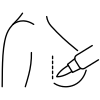
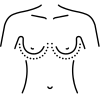
Skin markings.
Skin markings.
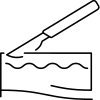
Deep-epidermization (skin detachment).
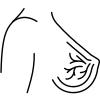
Removal of gland tissue.
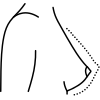
Modeling a new form of the gland.
Skin removal and formation of the nipple-areolar complex.

Results of the procedure

Reduction mammoplasty solves both functional and aesthetic problems. Successful operation improves the patient’s quality of life – previously disturbing pain disappears, physical activity and level of social activity increases, and emotional indicators improve. After breast reduction surgery, the breasts become symmetrical, regular round in shape, with an anatomical location of the nipple-areolar complex. To familiarize yourself with the results of the operation, you can see the section “Photos before and after breast reduction surgery.”

Result of breast reduction surgery

Possible complications during and after the procedure

Breast reduction surgery is an extensive and technically challenging surgical procedure, so complications are possible in rare cases. In the early postoperative period, hematoma, suppuration, or dehiscence of the wound edges may occur. Treatment usually consists of eliminating the source of bleeding and prescribing antimicrobial therapy.

Late postoperative complications include:

Formation of pronounced scars

Deformation of the nipple and areola

Marginal necrosis and necrosis of the nipple-areolar complex

Impaired sensitivity of the skin and nipple

Changes in the shape and prolapse of the breast

The doctor warns the patient in advance about the possibility of all complications.

Applying the correct markings, following the surgical technique, and removing the optimal amount of tissue will help to avoid complications. Therefore, breast reduction surgery must be performed in a clinic that has sufficient experience in performing such operations.

One of the areas of plastic and aesthetic surgery at the ForMe clinic in St. Petersburg is breast reduction surgery. Surgeons with more than 10 years of experience will perform reduction mammoplasty as carefully and technically competent as possible. The use of current surgical techniques and modern equipment allows you to achieve an aesthetically attractive result and avoid complications.

Postoperative period and rehabilitation

Inpatient observation after breast reduction lasts 1-2 days. In the first 3-5 days, moderate chest pain may occur. Swelling persists for several weeks. In the postoperative period, antibacterial, decongestant, anti-inflammatory therapy, analgesics, and dressings are prescribed. On days 12-14, the patient must come to the clinic to have the stitches removed.

For 4-6 weeks after surgery, you must wear special supportive underwear and limit physical activity. A mammogram is recommended 6–12 months after surgery. The breasts take their final shape after 6–12 months.

Frequently Asked Questions

Is it possible to breastfeed in the future?

Most types of reduction mammoplasty are associated with irreversible damage to the milk ducts, so future lactation is impossible. The exception is those types of operations that do not affect the nipple-areolar complex, for example, liposuction. The choice of technique remains with the plastic surgeon.

What happens to the mammary glands if you subsequently become pregnant?

If pregnancy occurs, breast size may increase or remain the same. Sometimes after cessation of lactation there is a decrease in breast size.

Can breast enlargement occur again?

Most often, repeated relapse occurs in patients undergoing intervention at puberty. Therefore, surgeons suggest resorting to reduction mammoplasty no earlier than 16 years of age.

Questions about breast reduction

Experienced doctors

    How much does breast reduction surgery cost in St. Petersburg?

    Стоимость операции зависит от ее объема и сложности, которые определяются на консультации пластического хирурга. Сложность операции может зависеть от различных факторов, включая тип операции, состояние пациента, наличие осложнений и требуемое время для выполнения операции.
    В данном разделе указана стоимость работы врача без учета анестезии, пребывания в палате, предоперационного обследования и послеоперационного наблюдения.
    Окончательную стоимость операции можно узнать по итогам очной консультации с хирургом.

    Отзывы пациентов


      Лицензии