Breast lift
Typically, women turn to a plastic surgeon when characteristic problems appear that are a consequence of pregnancy and lactation, significant weight loss, as well as natural age-related changes leading to sagging (ptosis) of the breasts. Breast lift operations occupy a significant place in the work.
Types of surgery
The term “breast mastopexy” refers to a whole range of different surgical techniques that share a common goal - to tighten sagging breasts. The causes and severity of ptosis can vary, so there are several techniques that can be used to achieve the desired result. These include:
-
Breast lift with a vertical incision.
-
Classic (anchor) operation.
-
Periareolar method.
-
Crescent or L-pexy.
In addition, surgical intervention, depending on the clinical indications and the desire of the woman, can be performed either in isolation (breast lift only) or in combination with other operations. The most popular is a lift with simultaneous breast augmentation. In this case, replenishment of the missing volume of the mammary glands can be carried out using implants or lipofilling (using the patient’s own fat tissue taken from other areas of the skin). Placing an implant in this situation helps to give the breast a more stable shape and prevents possible relapse of soft tissue in the distant future.

Mastoptosis is characterized by prolapse of the soft tissues of the mammary gland and the nipple-areolar complex with deformation and loss of breast volume. The most common cause of this problem is childbirth and natural feeding. After cessation of lactation, the mammary glands significantly decrease in volume, connective tissue and skin do not return to their original state.
Sagging breasts are a purely aesthetic problem. Thin, numerous stretch marks often remain on stretched skin. stretch marks. In addition, with mastoptosis, diaper rash often appears under the breasts, which further increases aesthetic discomfort. Some women try to regain their previous breast shape through exercise, but in this case they are ineffective.
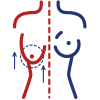
The second common cause of mastoptosis is age-related changes, in which the skin and ligaments lose their firmness and elasticity, as a result, the breasts become saggy and flabby. These processes are natural, so sooner or later they appear in every woman. Breast sagging is also observed with rapid weight loss. In this case, the volume of glandular tissue is preserved, but the skin does not have time to adapt to the new shape, which leads to breast sagging.
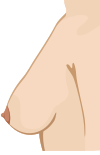
First degree ptosis (minor)
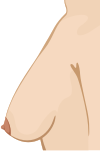
Second degree ptosis (moderate)
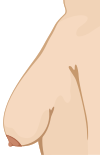
Third degree ptosis (severe)
When is a breast lift indicated?
To determine the indications for surgical intervention, a consultation with a surgeon is scheduled. During the appointment, the patient's medical history is collected. Particular attention is paid to previous pregnancies and childbirths, and the duration of breastfeeding. Fluctuations in a woman’s body weight (significant weight loss over 10-20 kg) are also important. Upon examination, the degree of prolapse of the mammary glands is determined.
When can surgery be performed?
Women can undergo a breast lift if they have breast sagging of any degree, it all depends on their desire to change their appearance. Moreover, the less pronounced the ptosis before breast lift, the better the aesthetic effect of the operation and the long-term prognosis for maintaining the attractive shape of the mammary glands.
Mastopexy is performed on women over 18 years of age for aesthetic purposes if they want to improve the attractiveness of the mammary glands. Ideal candidates for this operation are women with small breasts and mild ptosis. In clinical practice, situations are more common when a combination of a lift with the installation of implants is indicated.
How to prepare for a breast lift
When a patient decides to undergo mastopexy, the choice of the clinic where the operation will be performed is of key importance. Important points to pay attention to are:
In addition, it is recommended that two weeks before the date of the facelift surgery, after prior consultation with your doctor, you should stop taking or reduce the dosage of certain medications that affect the blood coagulation system and increase the risk of bleeding. These drugs include anticoagulants, antiplatelet agents, hormonal and anti-inflammatory drugs.
Examination and basic tests
In order to make sure that the patient’s health condition allows a breast lift to be performed without risk, it is necessary to undergo a comprehensive examination. The standard list of examinations includes a general clinical analysis of blood and urine, coagulogram, electrocardiography, determination of blood group and Rh factor, fluorography, blood test for infections (HIV, syphilis, hepatitis), biochemical blood test. Additionally, depending on the type of plastic surgery, consultations with a gynecologist, mammologist and ultrasound of the mammary glands may be necessary. If the patient has chronic diseases, the list of necessary examinations can be expanded. In some cases, an additional conclusion from a physician may be required regarding the absence of contraindications for planned surgical treatment.
Main contraindications to surgery
Common reasons limiting breast lift, like any other elective surgery, include systemic diseases and mental disorders. The operation should not be performed if the patient’s examination revealed the following health problems:
Also, mastopexy is not performed on patients under 18 years of age, during pregnancy and breastfeeding. When planning the date of the proposed operation, you need to take into account that it is undesirable to perform surgery during menstruation.
How is breast lift surgery performed?
Most often, a lift is performed under general anesthesia. Breast lift surgery is a highly variable medical procedure. A wide variety of techniques allows us to find an individual approach to each patient. Surgical tactics are determined by the experience and preferences of the surgeon. Let's consider the main methods of operations.
This method is the operation of choice for women with moderate mastoptosis and stretched areolas. During the lift, incisions are made around the areola and in the center of the mammary glands vertically down to the inframammary fold, then excess skin around the nipple and at the borders of the lower quadrants is removed, and loose tissue is tightened. The duration of the operation is about 2 hours. Most often, this method of surgical intervention preserves the sensitivity of the nipple and the natural shape of the breast. One of the disadvantages of this method of mastopexy is the vertical scar, which becomes almost invisible a year after the operation.
To get acquainted with the results of changes in the appearance of the mammary glands, we suggest looking at photos before and after a breast lift and studying reviews from patients after vertical mastopexy.
It has limited indications and is used only for small degrees of prolapse and in the absence of asymmetry of the mammary glands. Periareolar mastopexy lasts about one hour on average.
This operation is indicated for moderately severe mastoptosis and moderately reduced breast skin tone.
This operation is performed for severe ptosis of the mammary glands. In this case, the appearance of the surgical suture resembles an anchor or an inverted letter “T”. Such a wide surgical approach allows the surgeon to achieve maximum correction of mastoptosis. The advantage of this technique is the ability to radically change the shape of the mammary glands during the operation, taking into account the patient’s wishes. Unfortunately, scars remain on the skin, which over time will become barely noticeable; in addition, rehabilitation is longer compared to other methods.
A lift with endoprosthetics is a mastopexy that improves the shape of the mammary glands. In most clinical situations, lifting and implant placement are performed during a single surgical procedure. In this case, the method of lifting (periareolar, vertical, anchor) depends on the degree of mastoptosis, and the method of placing silicone implants (under the breast or under the gland) depends on the supply of your own breast tissue. The advantages of this method, compared to mastopexy without the use of implants, include a time-stable result, as well as the optimal shape and size of the mammary glands after surgery.
Result of the operation
The primary effect is noticeable in the first days after the lift. On average, the breasts take on their shape and natural softness 3-6 months after surgery, and after a year the patient will be able to evaluate the final result. Scars on the skin gradually fade over time and become less noticeable, and the mammary glands take on their final appearance. Good appearance and firmness of the breasts after mastopexy, correct shape of the mammary glands - all these changes in appearance allow a woman to feel confident and attractive.

Possible complications
With a highly qualified operating surgeon and the correct choice of mastopexy method, the risk of complications is minimal. But sometimes after breast lift surgery the following complications are possible:
Following all the recommendations of the attending physician in the postoperative period and wearing special compression garments during rehabilitation in most cases helps to avoid the development of complications.
The appearance of hypertrophic or keloid scars.
Asymmetry of the mammary glands.
The appearance of secondary breast ptosis, which occurs several years after the operation.
Decreased nipple sensitivity.
Postoperative period
Within a couple of hours after the operation, you can carefully get up, eat, and go to the toilet. In the early postoperative period, the doctor, as a rule, prescribes painkillers and medications.
In most cases, after breast lift surgery, drains are installed to allow wound fluid to drain and promote better healing. If the postoperative period is favorable, the drainage is removed within 1-2 days. On average, the surgeon removes the sutures after mastopexy on 12-14 days. The patient must wear compression garments around the clock for a month.
Rehabilitation after mastopexy
The length of rehabilitation time depends on the mastopexy method. It should be borne in mind that the younger the patient, the higher her ability to regenerate tissue and the faster the body recovers after surgery. In most cases, the rehabilitation period after breast lift surgery is about one to one and a half months. During this time, it is necessary to wear compression garments. To relieve swelling, you can use procedures that improve lymphatic drainage. It is also recommended that you stop playing sports for 4-6 weeks after surgery. The surgeon draws up an exact list of recommendations before discharging the patient from the clinic.
Frequently Asked Questions
Mastopexy does not affect conception, subsequent pregnancy and childbirth. The milk ducts usually do not intersect, so the ability to lactation remains after surgery.
After any surgical intervention, a scar remains on the skin. About a year after the operation, the scars will become thinner, pale and almost invisible on the skin.

Works of doctors
Experienced doctors
-

Ekimov Stanislav
Head of the Department of Plastic Surgery, plastic surgeon, physician of the highest qualification category
Подробнее -

Koen Ivan
Plastic surgeon, candidate of medical sciences, physician of the first qualification category
Подробнее -

Sarkisyan Irina
Plastic surgeon, Candidate of Medical Sciences, Associate Professor of the Department of Plastic and Reconstructive Surgery of St. Petersburg Medical University
Подробнее -

Ostrinskaya Tatyana
Plastic surgeon, doctor of the highest qualification category, candidate of medical sciences, associate professor
Подробнее -

Lopatkina Marina
Deputy Chief Physician for Development of the Cosmetology Department, physician of the highest qualification category, expert doctor, dermatovenerologist, cosmetologist
Подробнее
Breast lift prices
Стоимость операции зависит от ее объема и сложности, которые определяются на консультации пластического хирурга. Сложность операции может зависеть от различных факторов, включая тип операции, состояние пациента, наличие осложнений и требуемое время для выполнения операции.
В данном разделе указана стоимость работы врача без учета анестезии, пребывания в палате, предоперационного обследования и послеоперационного наблюдения.
Окончательную стоимость операции можно узнать по итогам очной консультации с хирургом.
Джимиев Мулдар Русланович – это находка! Если вы хотите безупречный живот, то он сделает все идеально. Я решилась на абдоминопластику с диастазом (обвисшая кожа после родов). Доктор ушил диастаз, устранил лишнюю кожу и перенёс пупок. Всё это "бесшовным" методом. Пупки у него, конечно, лучшие! А сам доктор душевный и внимательный!
Хочу поблагодарить Светлану администратора. Такого человеческого подхода и отношения к пациентам я никогда не видела. Спасибо не только за вашу профессиональную оперативность в решение всех вопросов, но и огромную поддержку без которой я бы не справилась.
Оставьте ваш отзыв